Mensagens

Portuguese Summer overview
Imagem
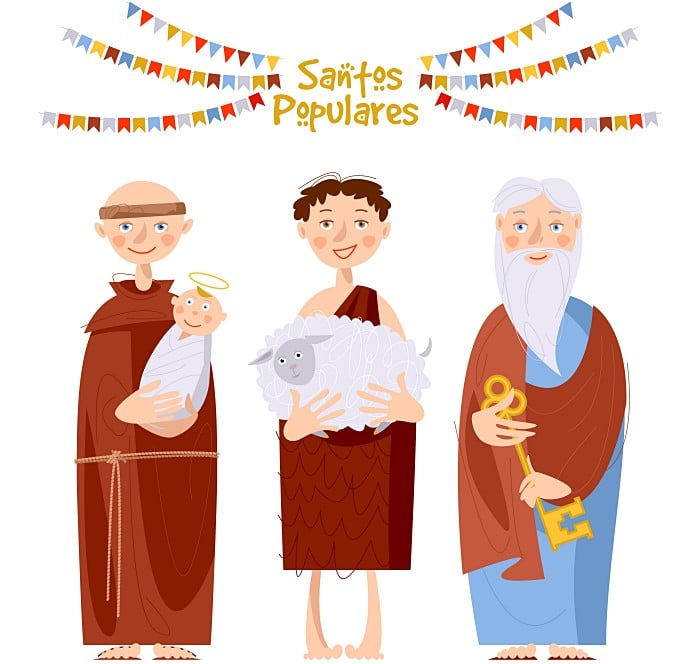
 Today, September 23rd, is the last day of Summer in the northern hemisphere (Portugal included). As such this seems like a good time to weigh in on how the season is traditionally in Portugal. Even before officially starting with June 21st, Portugal sees the " Santos Populares " ("Folk Saints") season, starting with Saint Anthony of Lisbon's June 13th feast day, then Saint John the Baptist's June 24th one, and finally Saint Peter's June 29th one. They are all marked by festões  (festoons) of tiny paper banners being lifted between buildings of party spaces, fried sardines, music, dancing, paper lanterns, alcoholic drinks and plastic honking hammer in the Saint John's case, each of the 3 feasts being more popular (over the other 3) in some locales more than in others (like St. Anthony in Lisbon, St. John in Oporto and St. Peter in Ehvora but also in many fishing communities). June, July and August are full of is religious (Catholic, with its leftover...

Translation experiment: soup.

Imagem
from  For the Love of Portuguese Food / Milena Rodrigues "                                                        GREEN BROTH                                                              (6 people) Potatoes - 1 kilo/ 2,205 pounds water one big spoon soup [" concha " is literally "shell" due to the shape")] [Spanish]  Galician [variant]  cabbage - q.b.  [short for " quanto baste ",  as much suffices ] olive oil -  q.b.  [short for " quanto baste ",   as much suffices ] salt - [any amount wanted?] spicy sausage - 1 One puts to the fire the peeled potatoes with water, the salt and the spicy sausage. When they boil it...

ST. GIBAS AND ST. ZIDES by Manuel de Boaventura

Imagem
Sangibas and Sanzides are vocables of the topo- nymy of Vilachan [ sic , for «Vila Chan» Esposende]. This legend intends to give them explanation and meaning.   IN times of old, even beyond the Moorlanders' ones, lived in the plain, where today is Vilachã, two men, fair and good — the brothers Gibas e Zides, who had the begetting of hostelling Saint James in the shanty poor they dwelled in, about his passage through these lands, unto Galicia, where the Holy Apostle was going to found his church.        The Saint had asked for a-wrapping at the Big house of the lord of the land, on the point more meaded from the plain's; but it had been denied to him, in the assumption that he was a spy of the barbarian hordes of warriors, that came down to splinter the lands, to butcher-up the men and to rape the women.         The disciple of Jesus followed-through pathway, staring God's good sun going-down in a blaze over the sea.     ...